Block paving in Beckenham
A driveway that makes the house.
A block-paved driveway laid on a properly dug and compacted sub-base, with borders and banding that frame the house and carry the car for years.
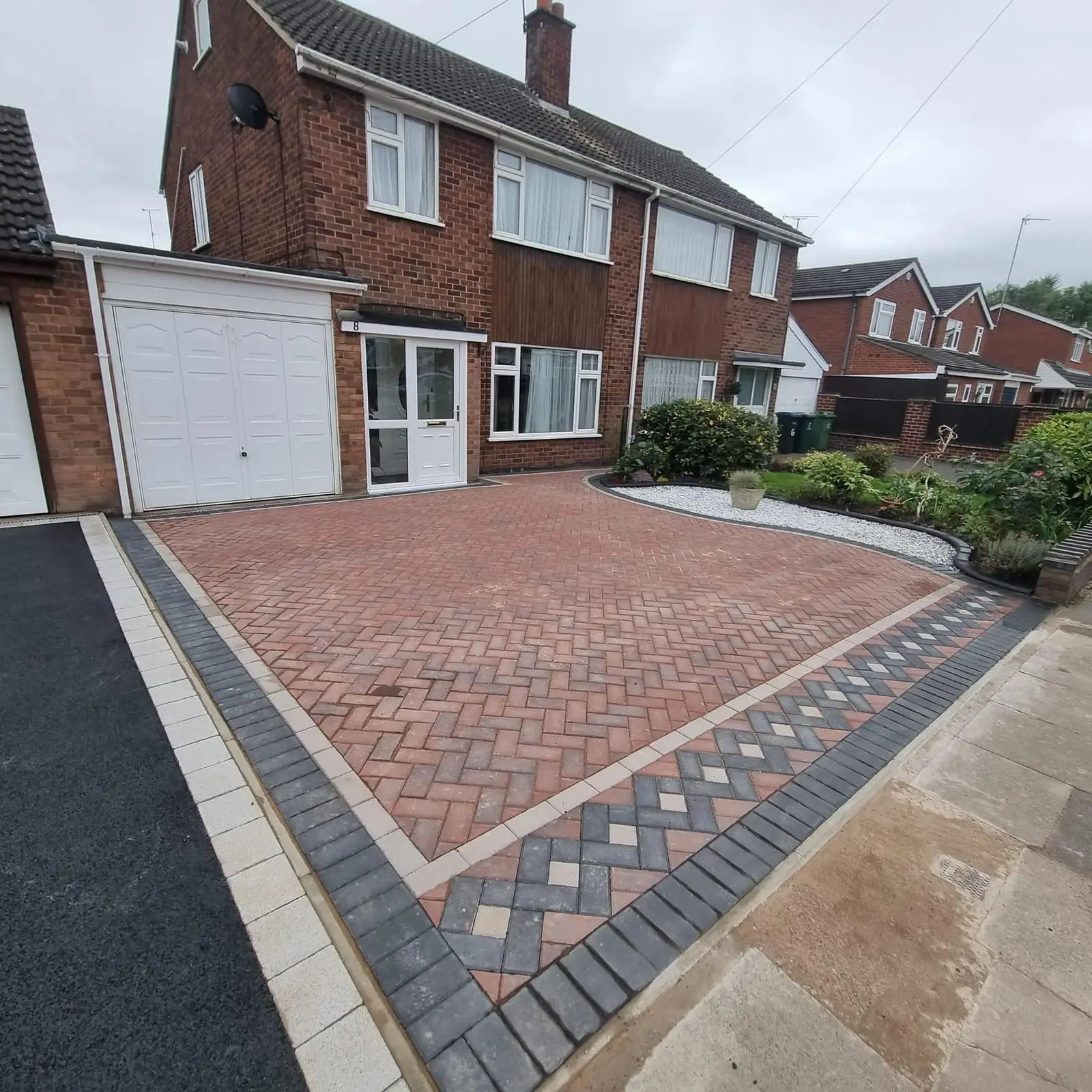
A block-paved driveway laid on a properly dug and compacted sub-base, with borders and banding that frame the house and carry the car for years.
Block paving spreads the load across thousands of interlocking units, so it copes with turning wheels and can be lifted and relaid if a section ever needs attention.
The strength is in what you don’t see: excavation to firm ground, a compacted sub-base and a screeded bed before a single block goes down.
Laid at 45 or 90 degrees, herringbone locks the blocks together so they resist creeping under cars turning and braking.
Kerbs and border courses set in concrete stop the paving spreading, and give a clean line against lawn, beds and the pavement.
Colour, size and laying pattern all change how a driveway sits against the house. Borders and banding can be picked out in a contrasting block.
The everyday choice, in greys, charcoals, reds and brindles. Herringbone suits driveways; stretcher bond and basketweave suit paths and smaller areas.
Fired clay holds its colour for decades rather than fading, and sits naturally beside older brickwork.
Wider joints filled with grit let rain soak through to a free-draining sub-base, so a front garden meets the permeable surfacing rule without a soakaway.
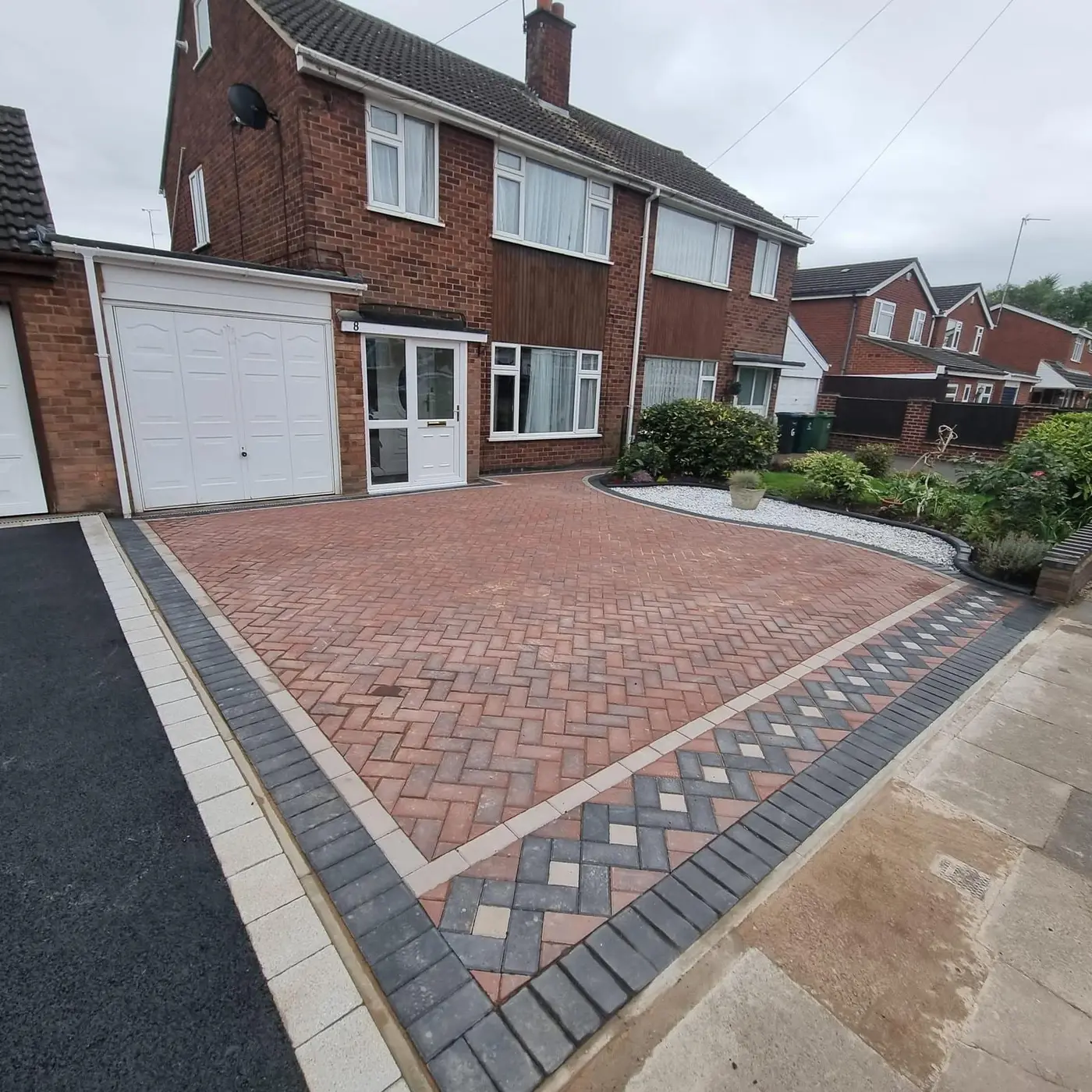
Red and brindle herringbone block paving with a cream inset line, a charcoal border and a patterned entrance band.
View project →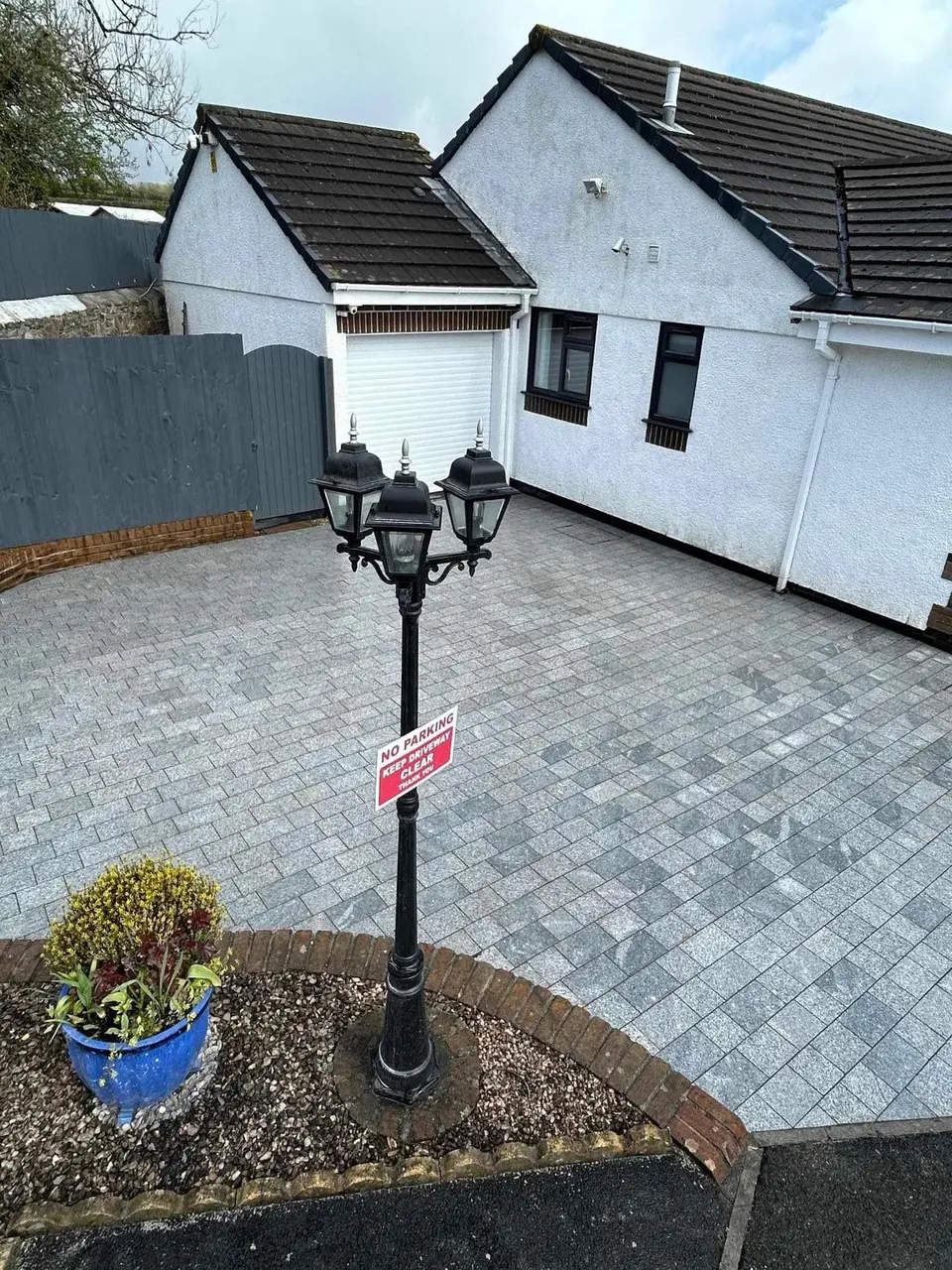
A grey block-paved driveway wrapping around a bungalow, with a dark border, curved planted beds and a lamp post at the entrance.
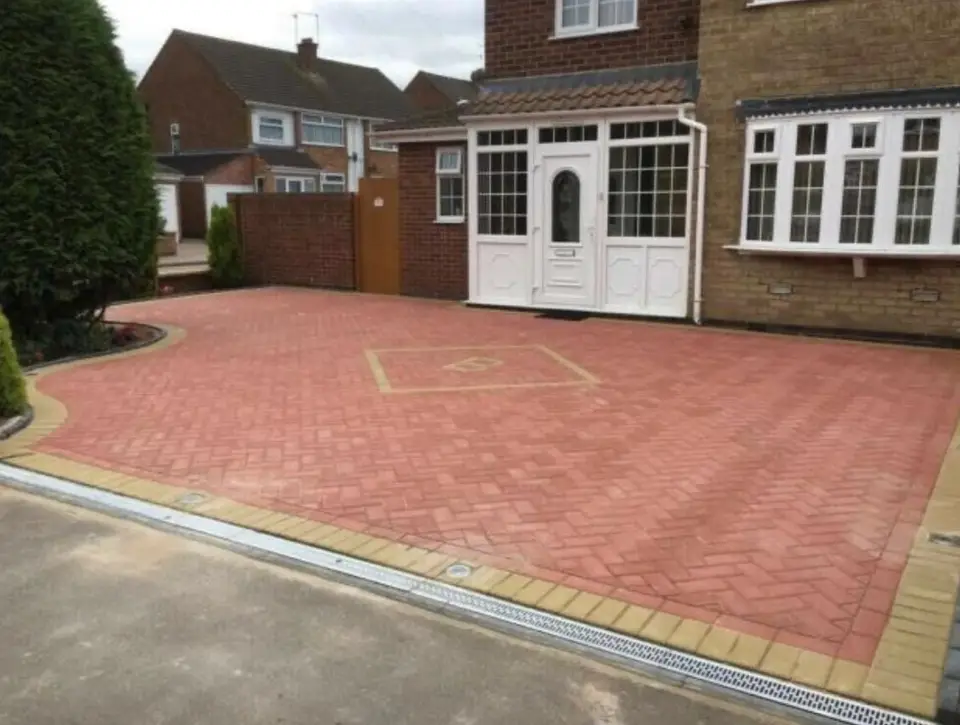
Red block paving laid in herringbone, with a buff border, a buff diamond inlay at the centre and a channel drain across the front.
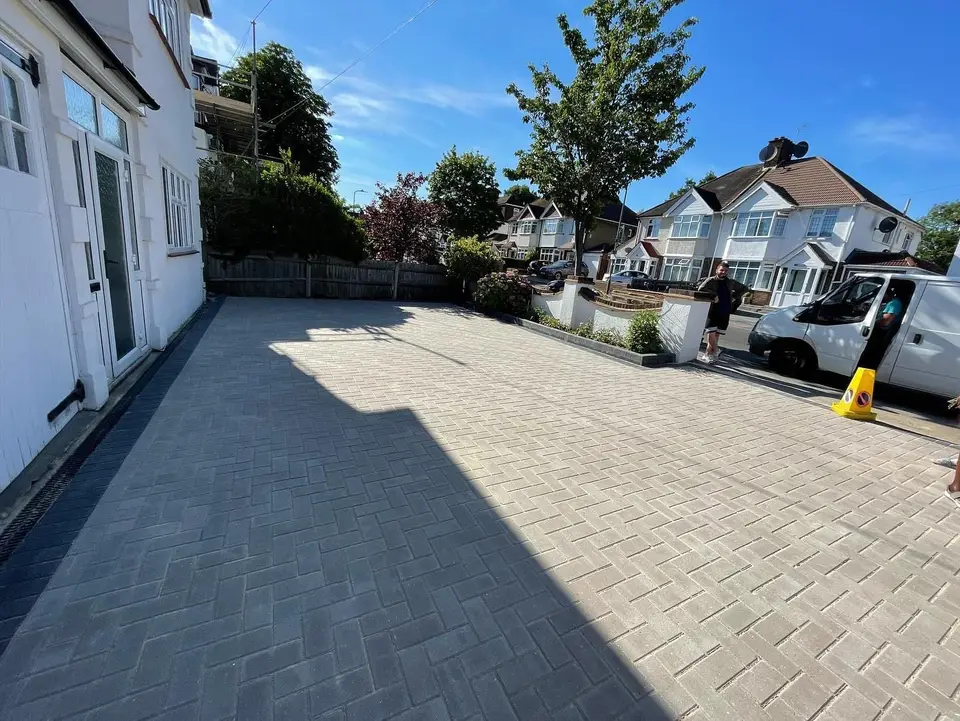
A wide grey block-paved driveway laid in herringbone, with charcoal border courses across the front of the house.
The same way of working on every job, from the first conversation to the handover.
Not if it is permeable or drains to a lawn, border or soakaway on your property. Laying more than 5 square metres of new hard surface in a front garden that runs off onto the road needs planning permission. Permeable block, or standard block laid to fall towards a planted area or soakaway, avoids that.
To drive across the pavement you need your council’s approval as highway authority before the kerb is lowered, and the council usually says who may do the work. On a classified road, planning permission may be needed as well.
Each block is locked in by its neighbours in two directions, so the pattern resists the twisting and pushing of tyres better than straight rows. It is the usual choice wherever cars turn.
Weeds in block paving mostly grow from seeds landing in the joints, not from below. Joints kept topped up with kiln-dried sand and brushed regularly stay tight and give weeds little to hold on to.
Yes. Unlike a poured surface, blocks can be lifted and relaid, for example after a utility repair, and the same blocks go back down so the patch doesn’t show.
Book a visit. We’ll look at the frontage, the levels and where the water goes, and talk through colours and patterns.
Your enquiry is with our design team. We’ll be in touch within one working day to book your free visit.