Fencing in Beckenham
Your garden, to yourself.
Privacy, shelter and a clean backdrop for the garden, built on posts set deep and straight so the fence stays upright.
Privacy, shelter and a clean backdrop for the garden, built on posts set deep and straight so the fence stays upright.
A fence is the largest single surface in most gardens. Built well, it gives privacy and a backdrop for planting and lighting. Built badly, it leans within a few winters.
Posts go in at the right depth, set in concrete or on a post system, and are lined up before any boards or panels are fixed.
A gravel board along the bottom keeps the timber clear of wet soil, which is where most fences start to rot.
Slatted and close-board fences make a clean line behind planting, seating and wall lights.
Each style changes how private, how open and how modern the garden feels.
Overlapping vertical boards on rails between posts. Solid, private and the traditional choice for boundaries.
Planed horizontal slats with small gaps between them. Clean and contemporary, letting a little light and air through.
Ready-made panels in a frame, slotted between posts. Quicker to fit and easy to replace a single bay.
Any timber fence finished in a dark stain or paint, which makes it recede and lets planting stand out.
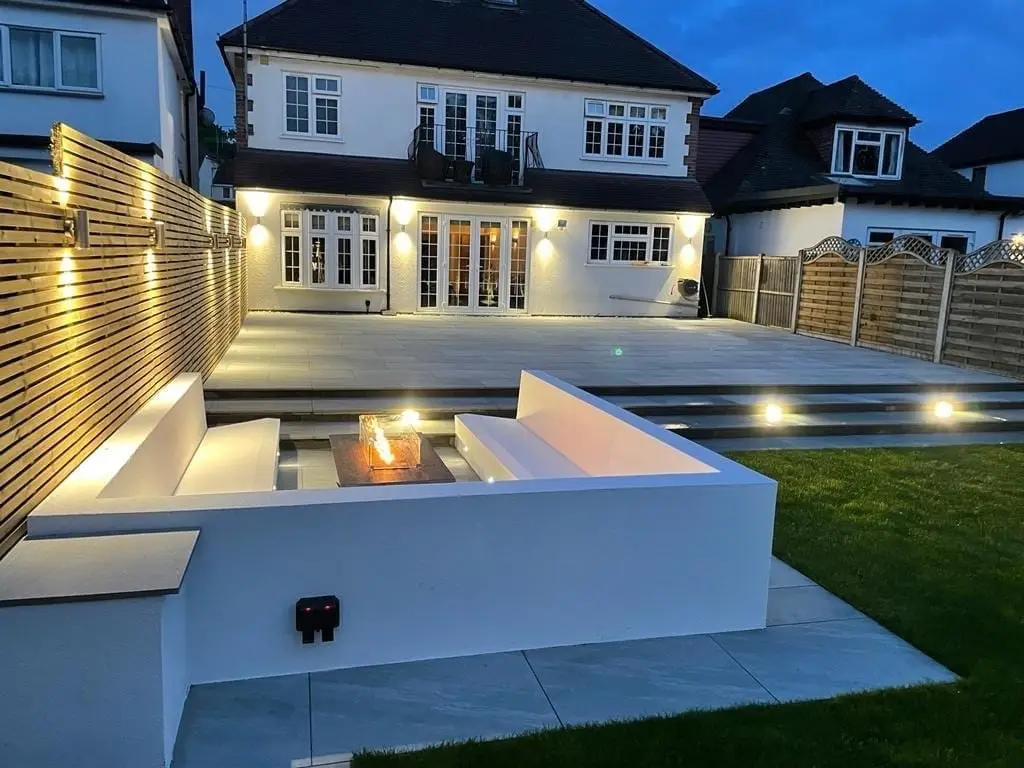
A wide porcelain terrace, a long lawn with lit paths and a sunken seating area around a fire pit, with lights along the fencing.
View project →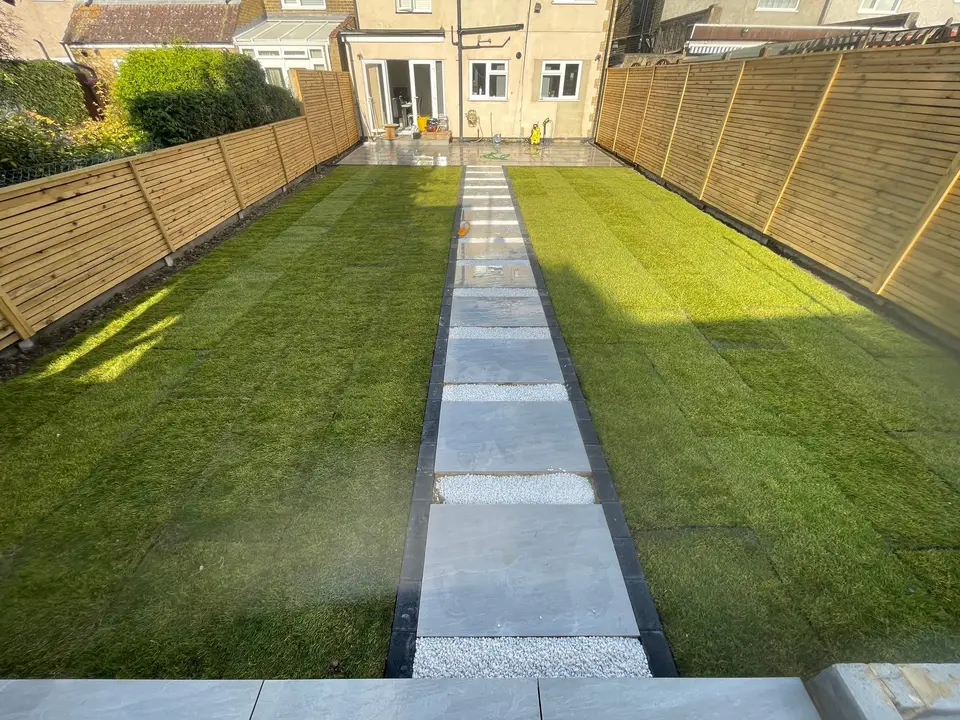
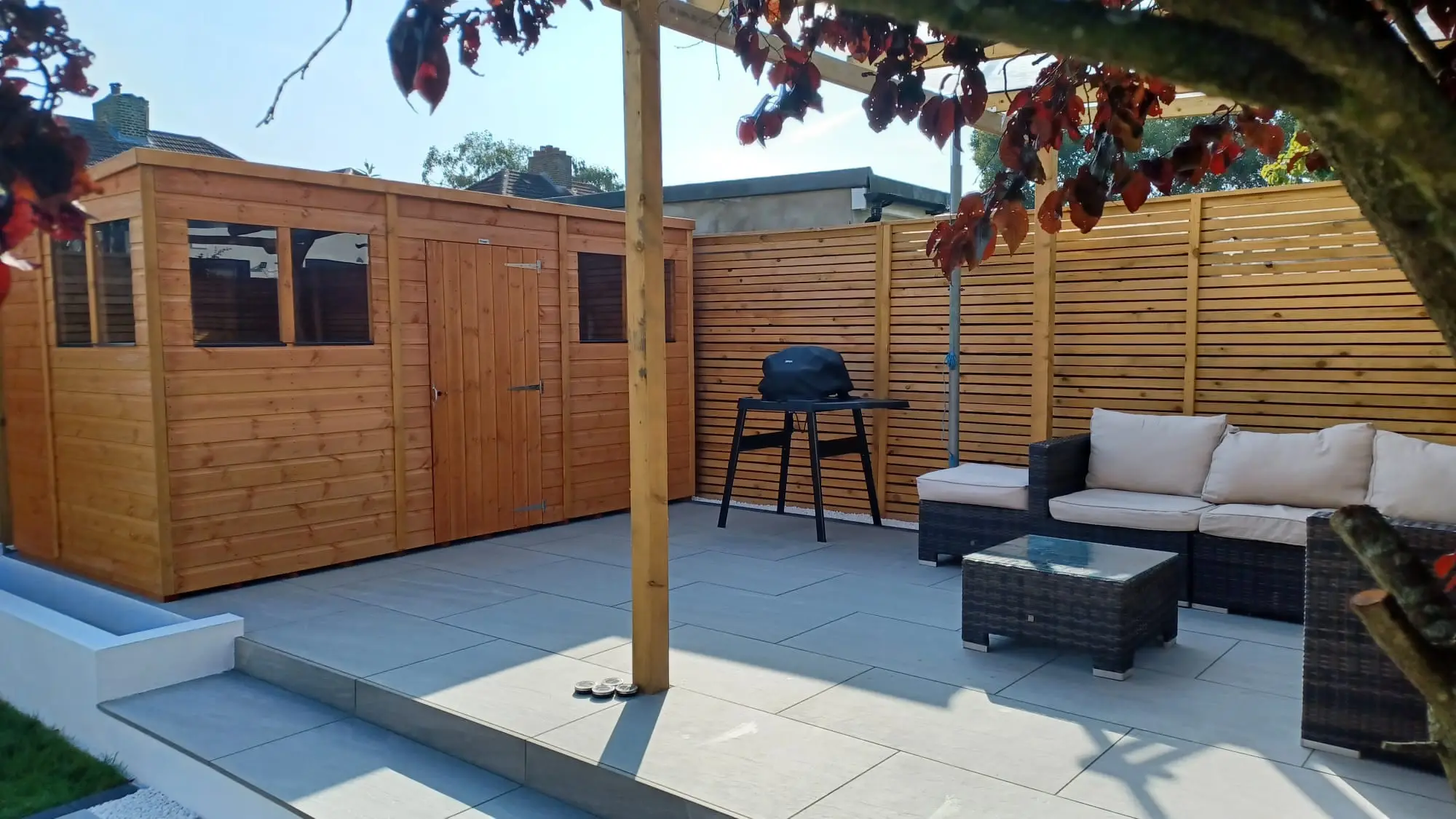
A raised porcelain terrace with steps and a pergola beside a timber garden room, slatted fencing, and a long lawn either side of a porcelain path.
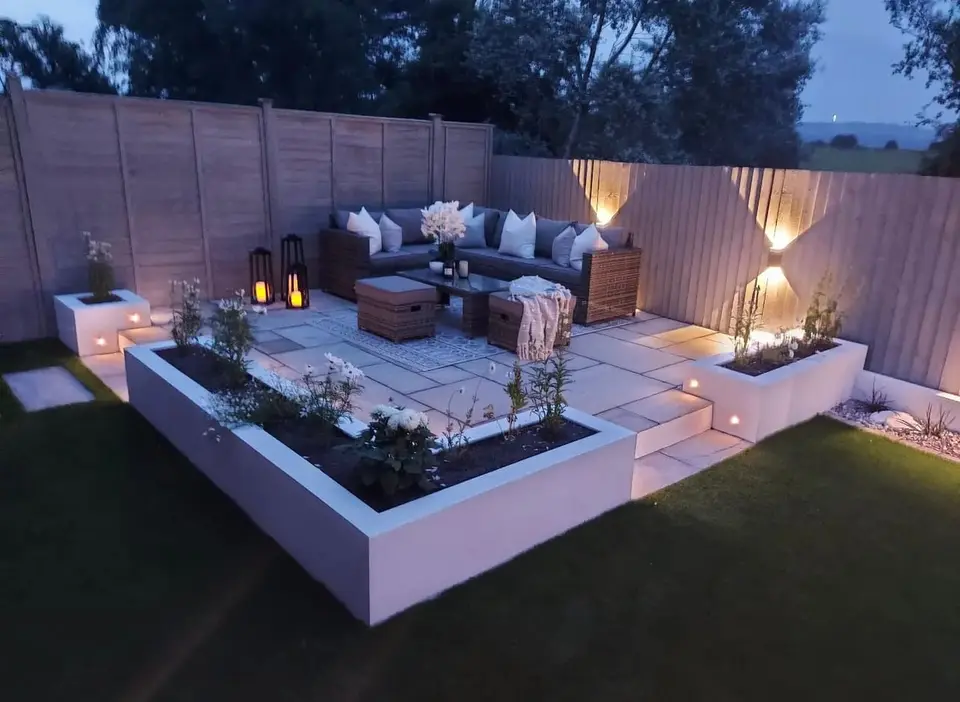
A light paved, raised seating area enclosed by white rendered planters, with recessed lighting, fencing and artificial grass.
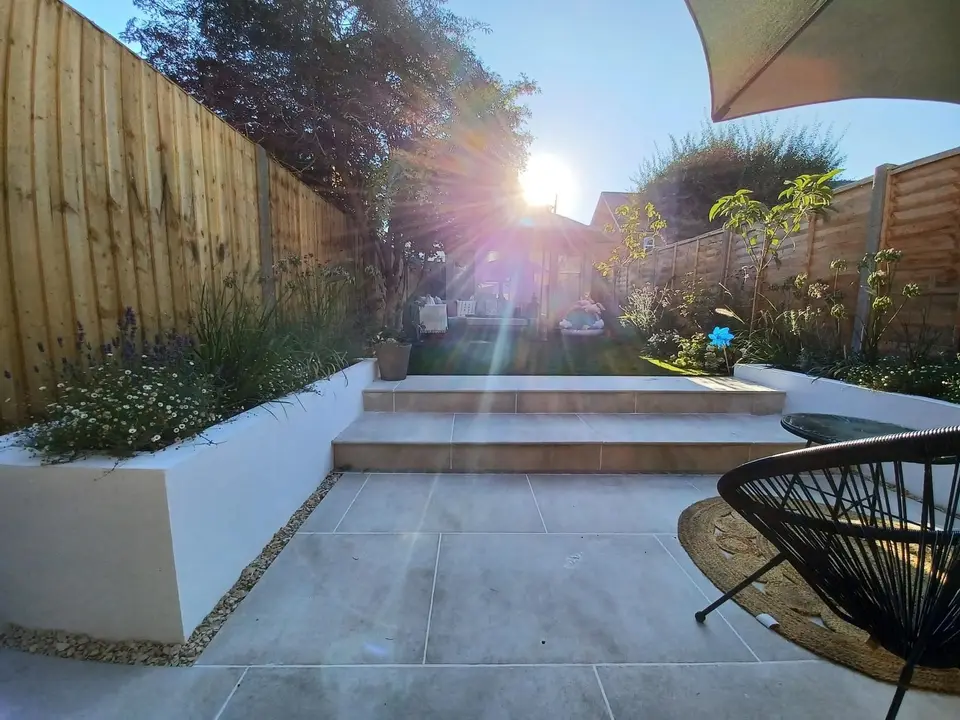
A grey patio connected to a raised lawn by broad steps, with white rendered planters and boundary fencing.
The same way of working on every job, from the first conversation to the handover.
In England you can usually put up a fence up to 2m high without planning permission, or up to 1m where it is next to a road used by vehicles or that road’s footpath. Listed buildings need consent, and some estates have their own restrictions.
Your title deeds or the Land Registry title plan may show who is responsible for each boundary. Where it is unclear, agree it with your neighbour before the old fence comes down.
Not to timber fences. The Party Wall etc. Act 1996 covers masonry walls on or astride a boundary, such as garden walls, not wooden fences. It is still good practice to talk to your neighbour before replacing a shared fence.
Timber posts look better with slatted and contemporary fences. Concrete posts and gravel boards last longer in wet ground and suit standard panels. The choice depends on the style and the soil.
Keep soil and planting off the bottom boards, and re-stain or treat the timber every few years. Pressure-treated timber resists rot but still benefits from a protective coat.
Book a free design visit. We’ll look at the boundaries, talk about style and height, and check what the rules allow.
Your enquiry is with our design team. We’ll be in touch within one working day to book your free visit.