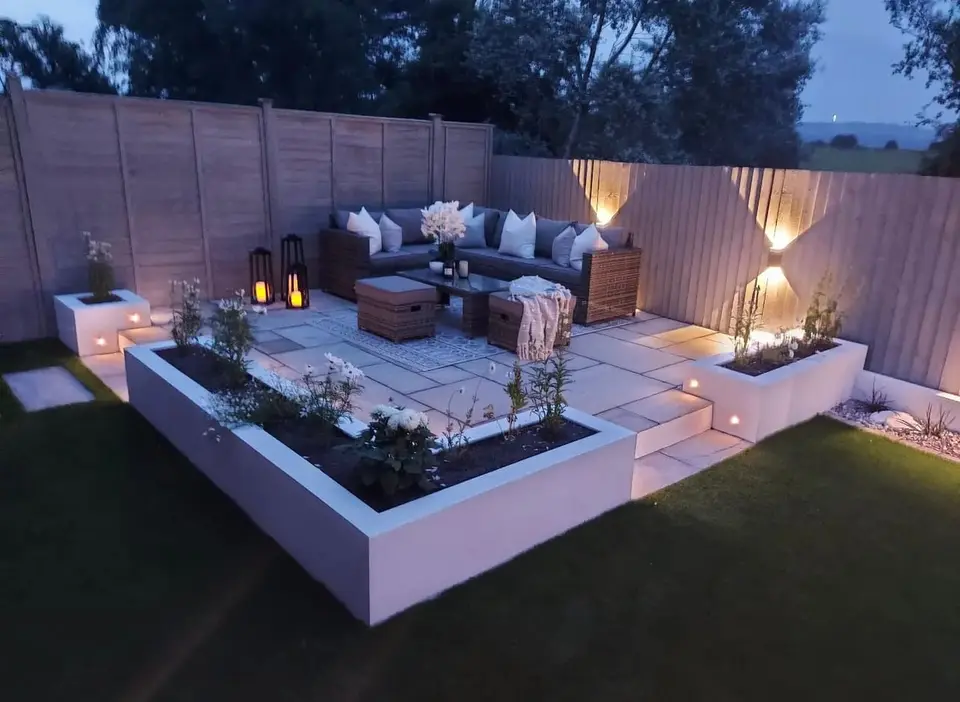
Garden lighting in Beckenham
Still beautiful after dark.
Steps you can see, paths you can follow and a garden that still looks good from the house after dark.
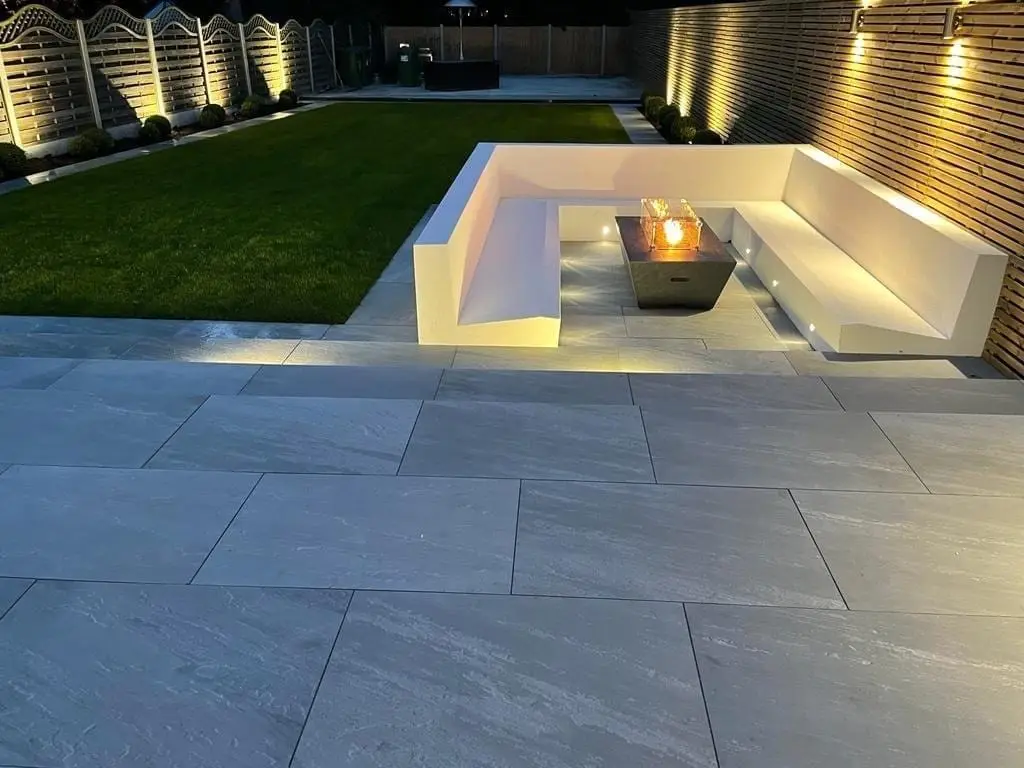
Steps you can see, paths you can follow and a garden that still looks good from the house after dark.
Good lighting is planned with the layout, not added afterwards. Cables are laid before the paving goes down, and lights are set into walls, steps and planters where they are needed.
Low lights on steps, level changes and paths, so you can move round the garden without a torch.
Fittings recessed into rendered walls, step risers and planters, with cable runs hidden under paving and in borders.
Wall washes and uplights pick out fences, planting and trees, so the garden reads clearly from the house at night.
Most gardens use a mix. Each type does a different job, from lighting the way to showing off a feature.
Small fittings set flush into steps, walls, planters or paving. Mark edges and level changes without glare.
Wall-mounted lights that throw a soft wash up and down a fence or wall, lighting a whole boundary.
Adjustable spotlights on a ground spike, aimed up into trees, shrubs or sculpture. Easy to move as the planting grows.
Low posts that throw light down onto a path or drive. Clear guidance from the gate to the door.
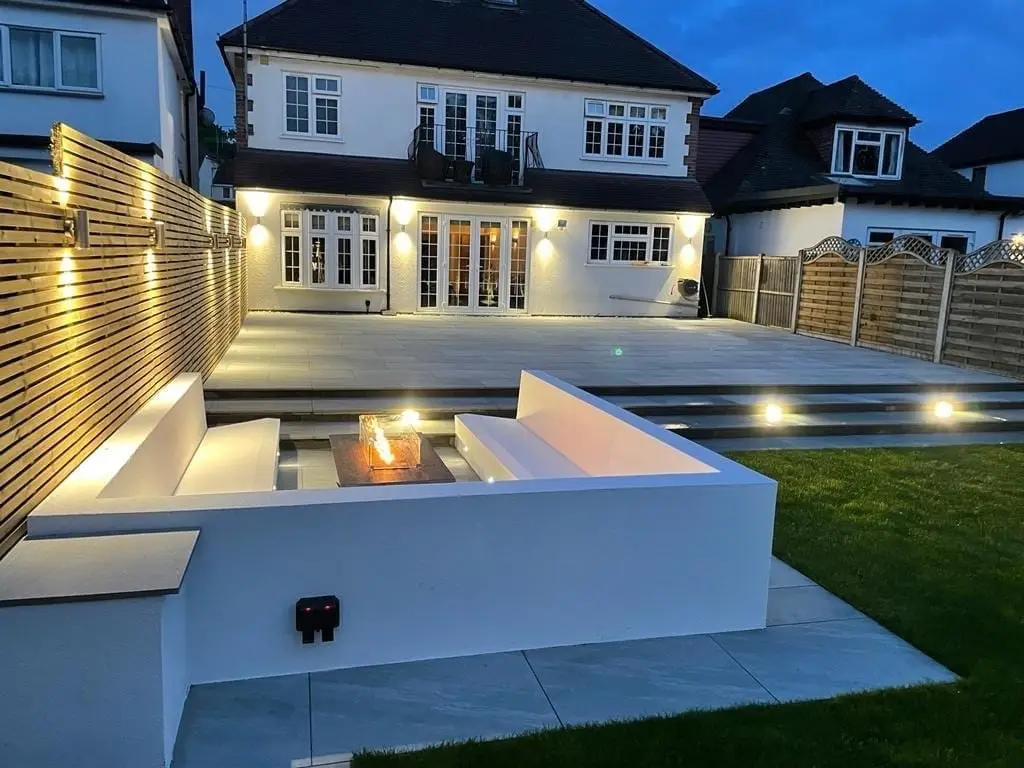
A wide porcelain terrace, a long lawn with lit paths and a sunken seating area around a fire pit, with lights along the fencing.
View project →The same way of working on every job, from the first conversation to the handover.
Low-voltage (usually 12V) lighting runs through a transformer, so the cable in the garden carries far less risk and is simpler to route and move. Mains (230V) fittings give more power for larger gardens but need protected cable and more careful installation.
All electrical work in a home and garden in England must meet the Building Regulations. It is notifiable to building control if it needs a new circuit or a new consumer unit; adding a light to an existing circuit outdoors usually is not. An electrician registered with a competent person scheme can self-certify notifiable work.
Ideally during the build, before paving, walls and planters are finished. Ducting laid early means cables are hidden and lights can be added later without lifting anything.
Yes. Lights can be split into zones on separate switches, and timers, dusk sensors or smart controls let them come on when you need them.
Solar lights are fine for marking a path, but they depend on daylight and fade in winter. Wired lighting gives steady, reliable light all year.
Book a design visit. We’ll look at how you use the garden after dark and plan where the light should fall.
Your enquiry is with our design team. We’ll be in touch within one working day to book your free visit.