Raised beds in Beckenham
Planting where you can enjoy it.
Planting brought up to where you sit, a change in level held neatly, and a patio given a proper edge.
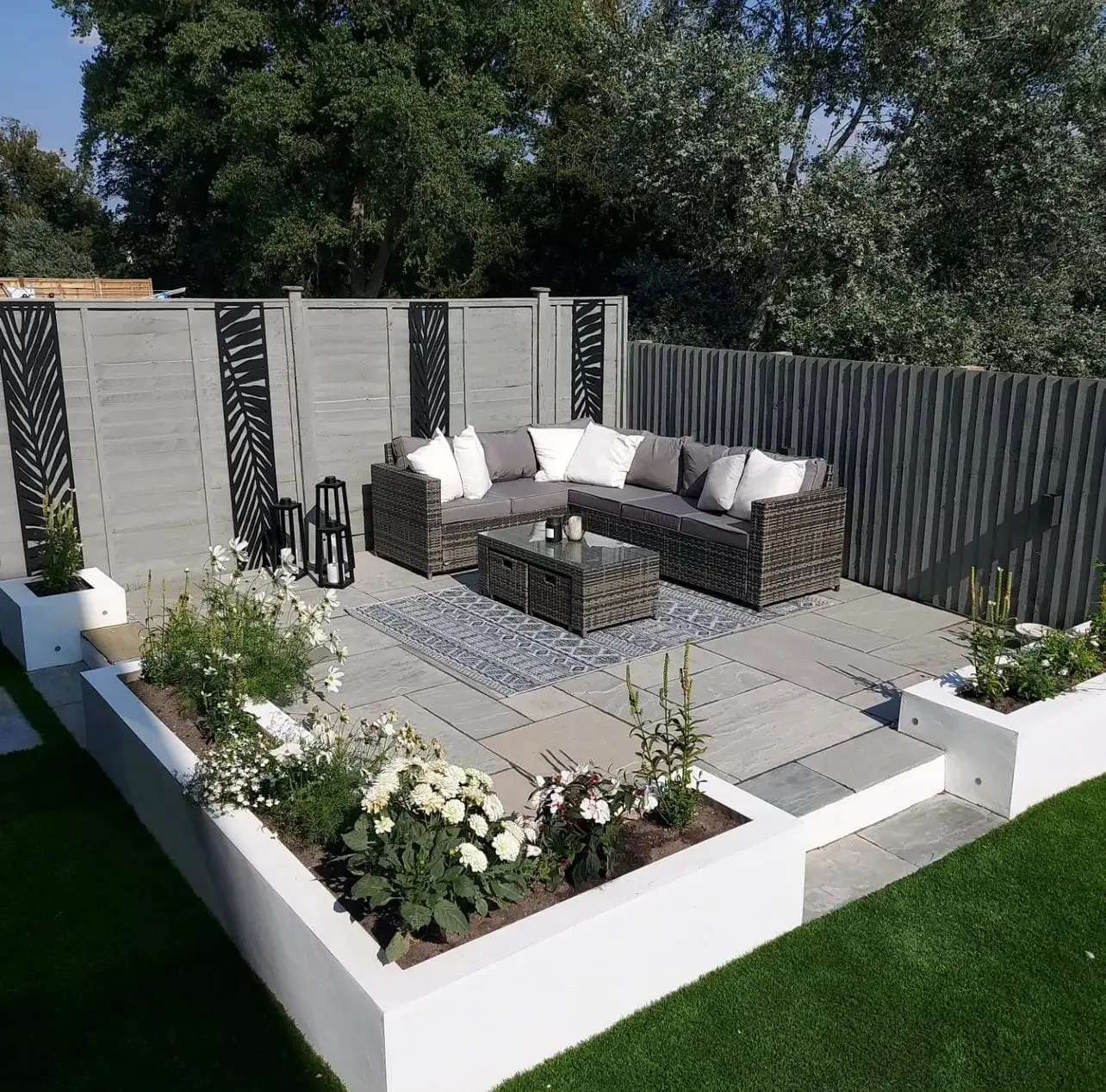
Planting brought up to where you sit, a change in level held neatly, and a patio given a proper edge.
A raised bed is a small wall with soil behind it. Built on a proper footing with drainage through the base, it holds its line for years and gives the garden a clear shape.
Beds along the edge of a terrace give it a finished boundary and divide paving from lawn without a fence.
Where the garden steps up, a raised bed does the job of a retaining wall and puts planting on the slope.
Beds built to seat height are easier to weed and water, and can double as a ledge to sit on.
The finish sets the tone. Match it to the house, the paving or the fence, and think about how much upkeep you want.
Blockwork with a smooth render coat, usually white or pale grey. Crisp and contemporary, and pairs well with porcelain.
Laid to match or complement the house. Warm, traditional and very durable, with a coping on top to shed water.
A block core faced in natural stone slips or split-face panels. Gives the look of solid stone with more texture than render.
Stacked and fixed sleepers make quick, natural-looking beds and steps. Softwood weathers to silver over time.
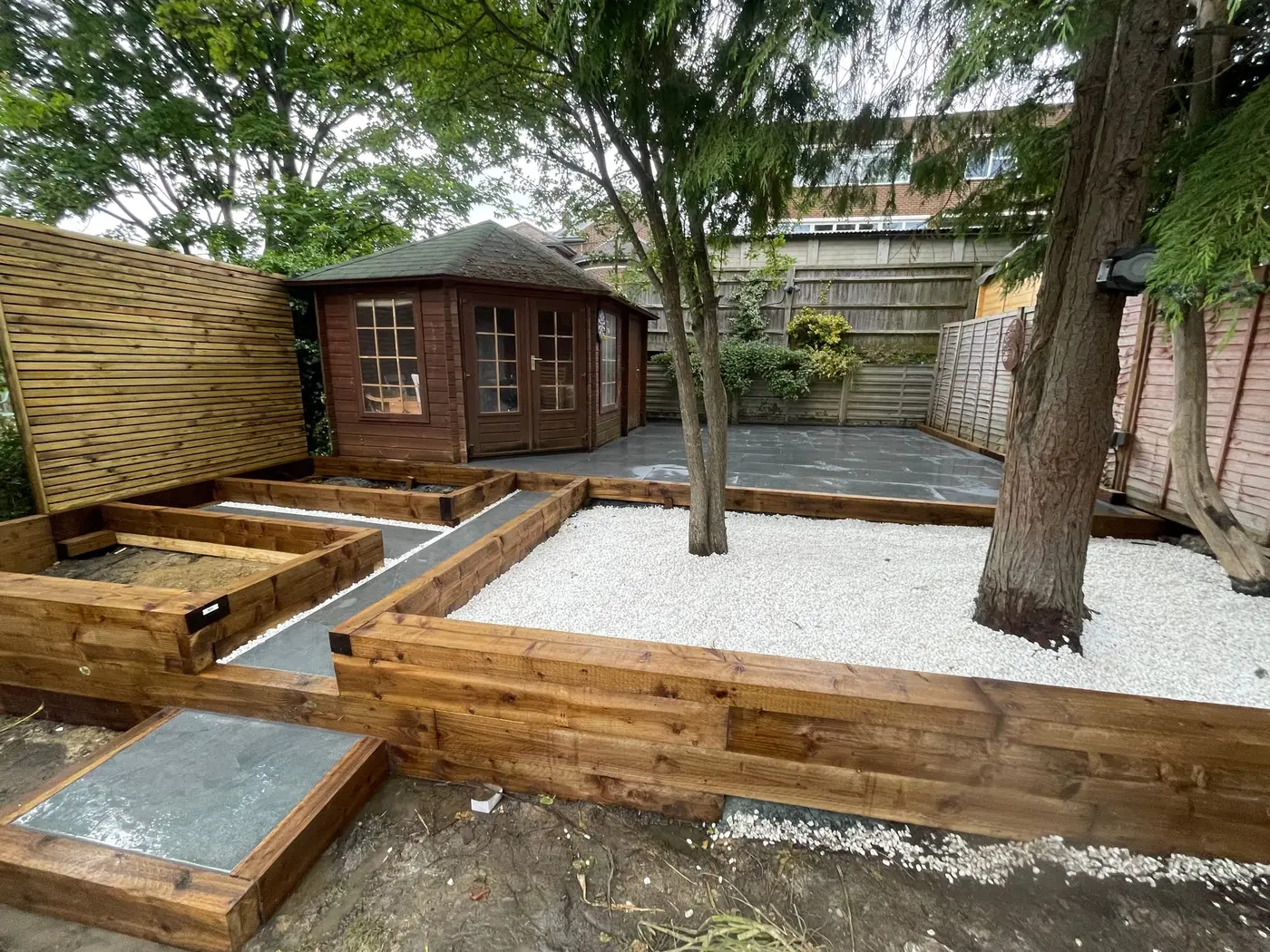
Timber sleeper raised beds and steps, white gravel around a mature tree and a paved terrace in front of the summer house.
View project →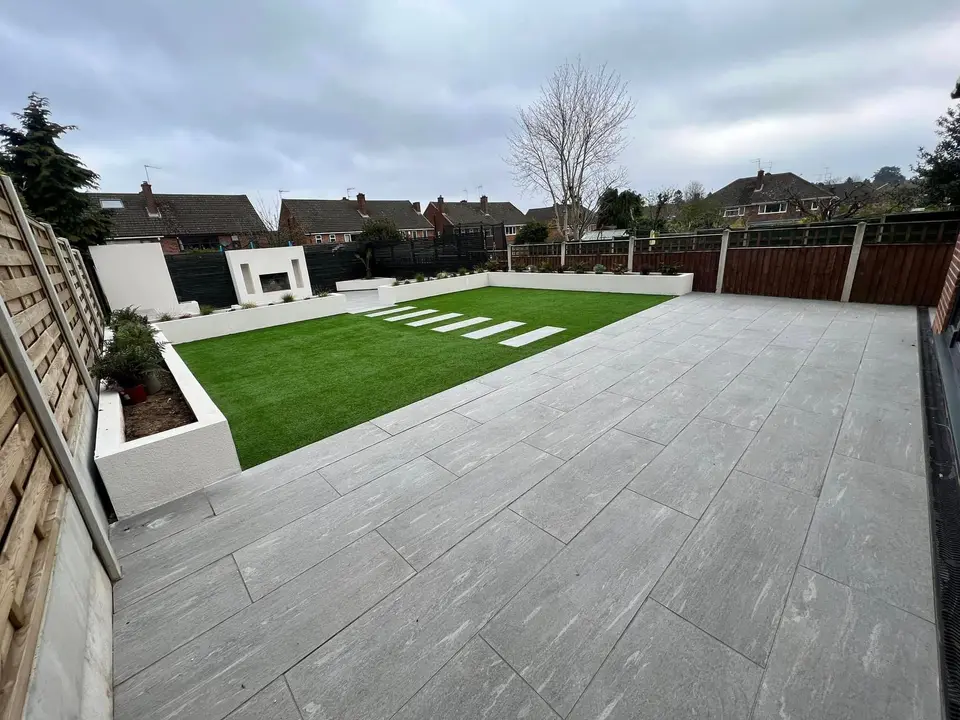
A large-format grey patio with broad steps, raised white rendered planters and a lawn with stepping stones.
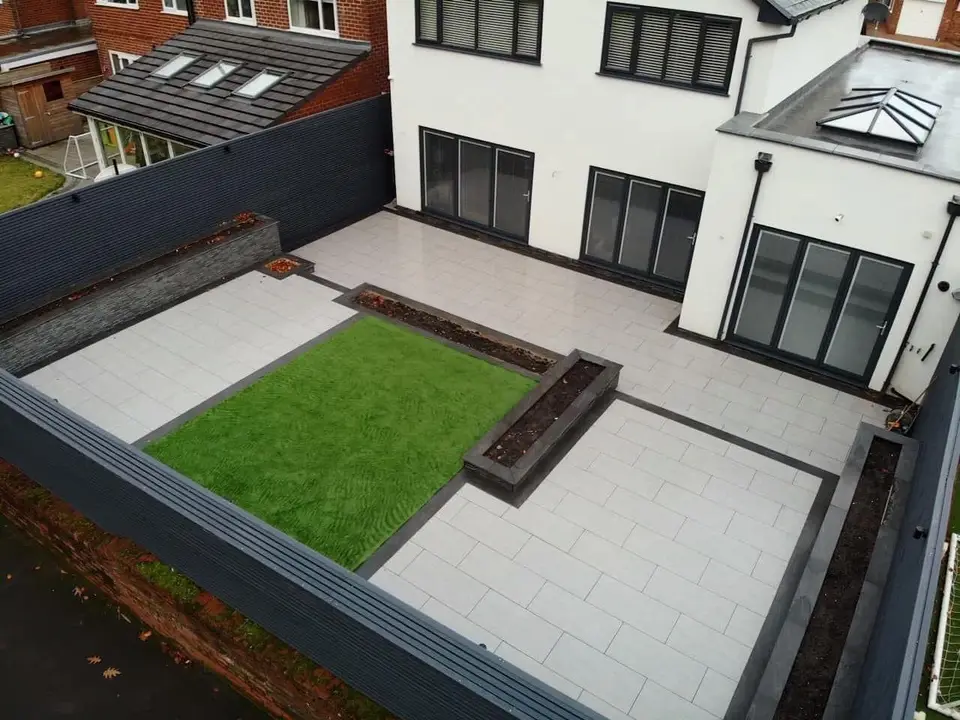
Pale paving and dark edging framing a rectangular lawn and a dark raised planter outside a modern home.
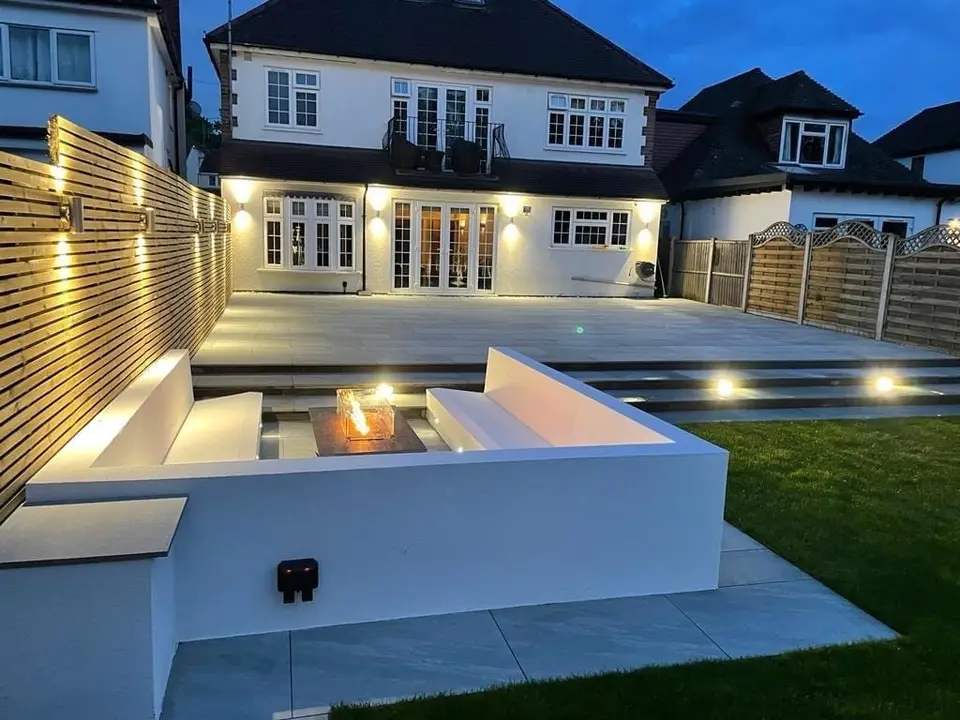
A wide porcelain terrace, a long lawn with lit paths and a sunken seating area around a fire pit, with lights along the fencing.
The same way of working on every job, from the first conversation to the handover.
It depends on the job. Around seat height makes the bed easy to tend and doubles as seating; a lower bed suits a border edge. Where it holds back a slope, the height follows the level change.
Yes. Water has to leave the soil, or the planting sits wet and the walls take the pressure. A free-draining base and weep holes or gaps low in the wall let it escape.
Render on a solid block wall with a proper footing and coping is stable. Hairline cracks usually come from movement in the base, which is why the footing matters more than the finish.
Yes. Raised beds warm up earlier in spring and drain well, which suits vegetables and herbs. Lining timber beds keeps soil off the wood.
Yes. Small recessed lights can be set into the face of a rendered or brick bed, which picks out steps and edges after dark.
Book a design visit. We’ll look at your levels, paving and planting, and suggest the build that suits them.
Your enquiry is with our design team. We’ll be in touch within one working day to book your free visit.