Resin driveways in Beckenham
No puddles, no loose stones.
A smooth, seamless driveway of natural stone bound in resin, laid over a sound, porous base with a clean edge to every boundary.
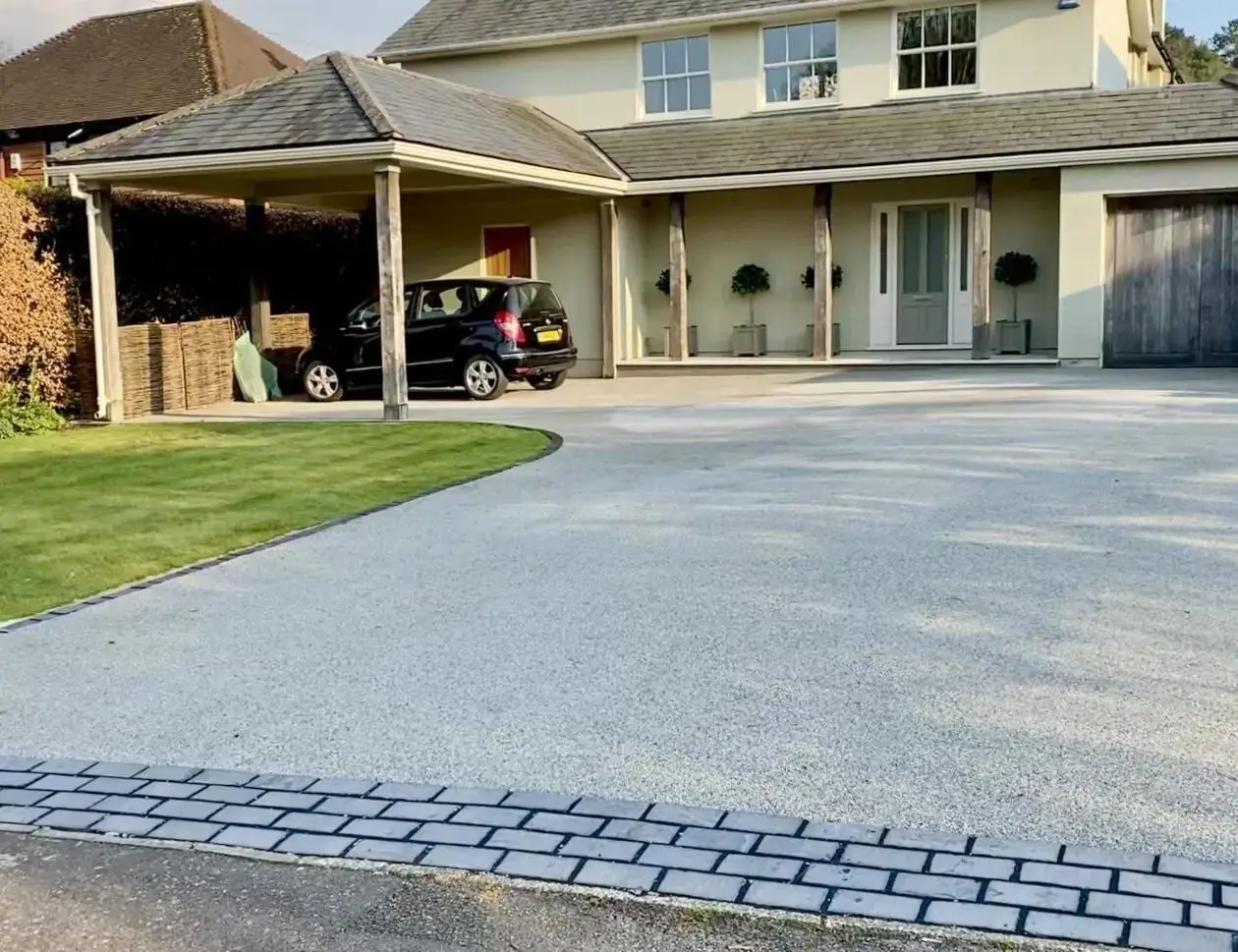
A smooth, seamless driveway of natural stone bound in resin, laid over a sound, porous base with a clean edge to every boundary.
The finish is only as good as the base beneath it. Laid on a sound, porous base with firm edging, resin-bound lets rain drain straight through.
Resin-bound goes onto porous asphalt or a similar open base over a compacted sub-base. Cracks or movement in an old drive underneath will show through.
With no joints and an open texture, resin-bound on a permeable base lets water soak away, which is why it usually meets the front garden permeable surfacing rule.
Resin needs a firm edge: block, kerb or metal edging, which also frames the colour of the stone.
The two sound alike but behave very differently. Within resin-bound, the stone blend sets the colour.
Stone fully mixed with resin and trowelled smooth. Permeable on the right base, with a flat, seamless finish and no loose stones.
Resin spread on a solid base with loose stone scattered over it. A textured, gravel-like finish, but not permeable, and stones can shed over time.
Cool, pale mixes that suit render and modern frontages. Lighter blends want a UV-stable resin so they don’t yellow in the sun.
Honey and buff gravels that sit well beside red and yellow brick.
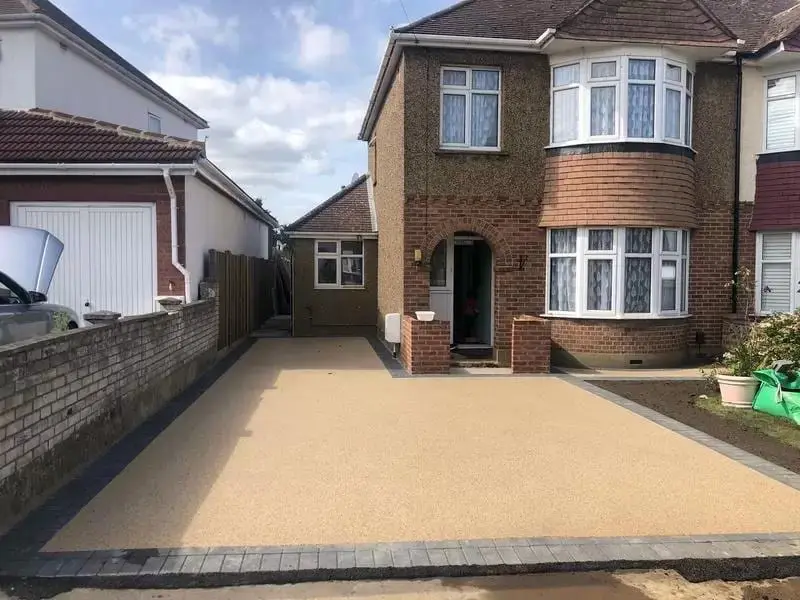
A golden resin driveway running the full width of a 1930s semi, framed by a charcoal block border.
View project →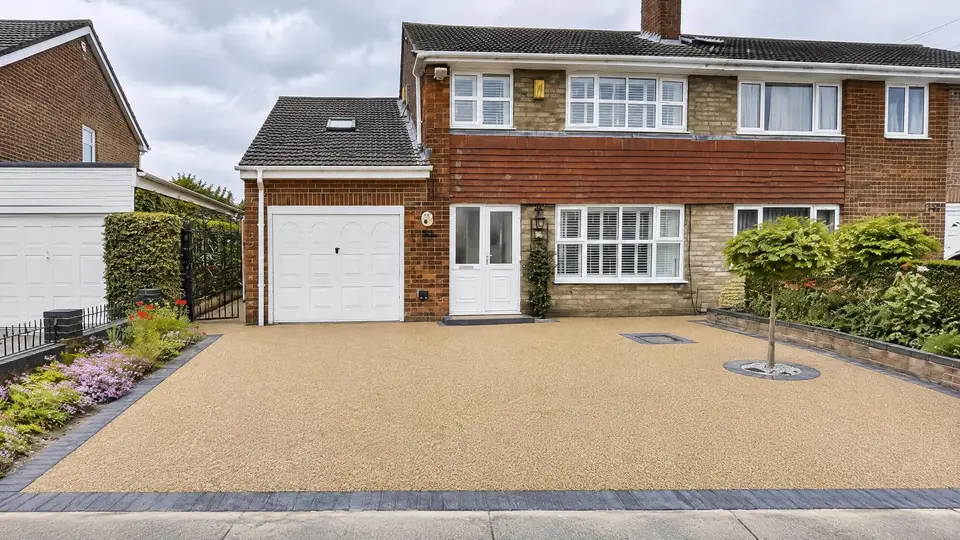
A golden resin driveway across the front of a semi-detached house, edged in charcoal block, with a tree set into the surface.
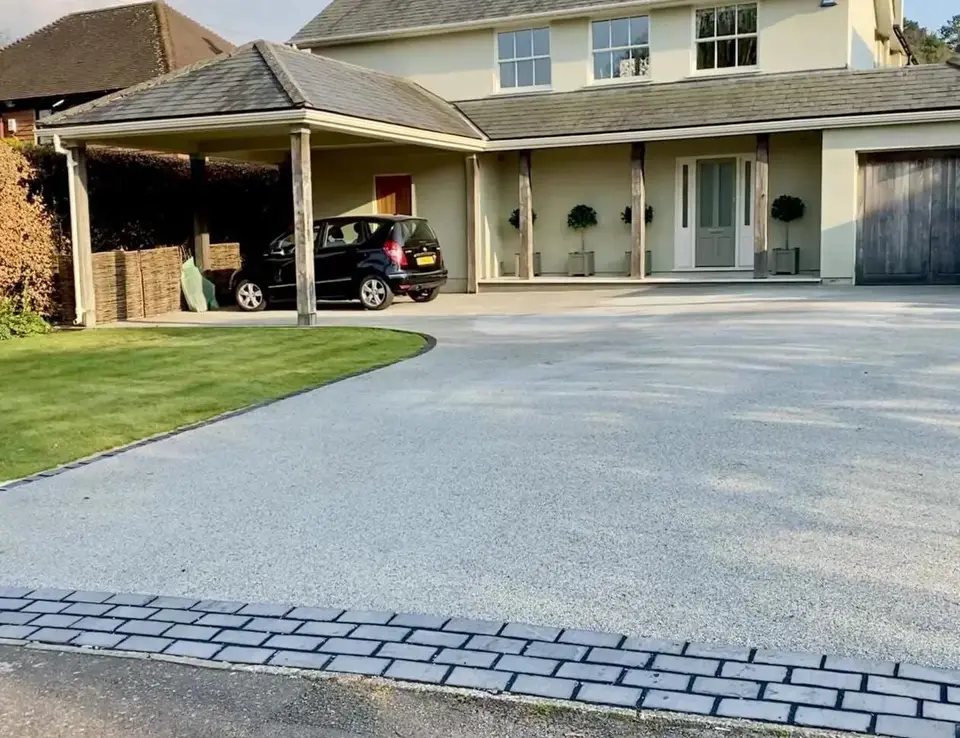
A broad silver-grey stone driveway curving up to a detached house, with a dark block band at the entrance and a curved lawn edge.
The same way of working on every job, from the first conversation to the handover.
Resin-bound is, if it is laid on a permeable base. Resin-bonded, where stone is scattered onto resin over a solid base, is not. In a front garden, more than 5 square metres of new impermeable surface needs planning permission unless it drains to a permeable area on your property.
Sometimes, if the existing tarmac or concrete is sound, level and well drained. Laid over an impermeable base, though, the finished drive is no longer permeable, so the water has to go to a border, channel or soakaway instead.
Resin itself is flexible, but it follows the base. Cracks in resin almost always come from a weak or moving base, which is why the base is built or checked first.
A regular sweep and an occasional wash keep the pores open so it keeps draining. Leaves and moss left to sit are what clog it.
To drive across the pavement you need your council’s approval as highway authority before the kerb is lowered. On a classified road, planning permission may be needed as well.
Book a visit. We’ll look at what’s there now, what it sits on and where the water goes, and talk through stone blends.
Your enquiry is with our design team. We’ll be in touch within one working day to book your free visit.