Tarmac driveways in Beckenham
Clean black lines, neat edges.
A tarmac driveway laid in rolled, compacted layers over a solid sub-base, finished with neat edging and kerbs.
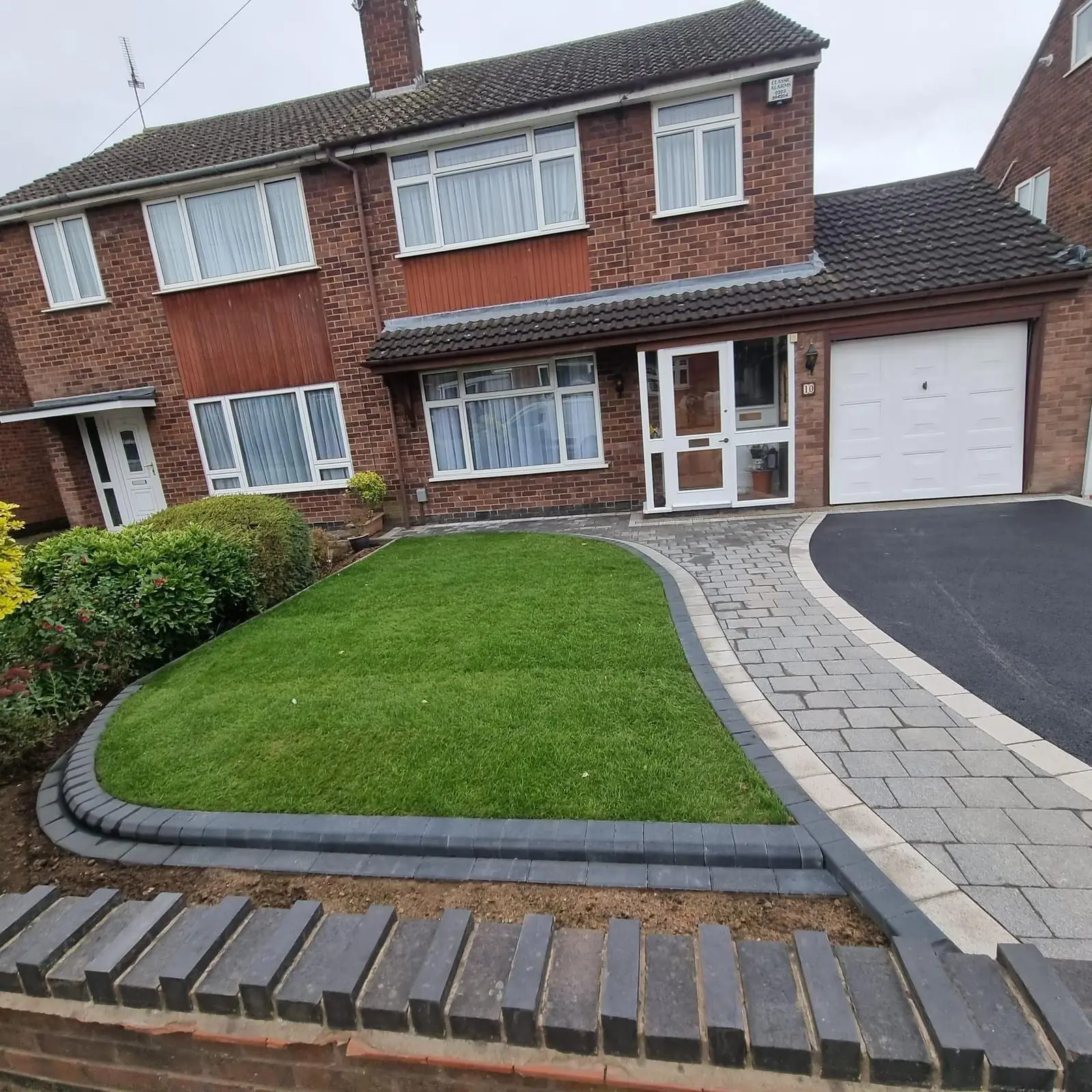
A tarmac driveway laid in rolled, compacted layers over a solid sub-base, finished with neat edging and kerbs.
Tarmac is flexible, copes well with heavy use and suits long or wide driveways. The base makes it last; the edging makes it look finished.
A compacted sub-base, then a base course and a wearing course, each rolled while hot so the surface is dense and even.
Tarmac has no edge of its own. Kerbs or block edging set in concrete stop it crumbling at the sides and give a sharp line.
Standard tarmac doesn’t let water through, so it is laid to falls into a channel drain, soakaway or border, or a porous asphalt is used instead.
Most tarmac drives are black, but colour and drainage are both choices worth making early.
The classic finish: dense, smooth and hard-wearing, and straightforward to patch.
Red or other pigments mixed in, or decorative chippings rolled into the surface for texture and colour.
An open-graded mix that lets water drain through to a free-draining sub-base.
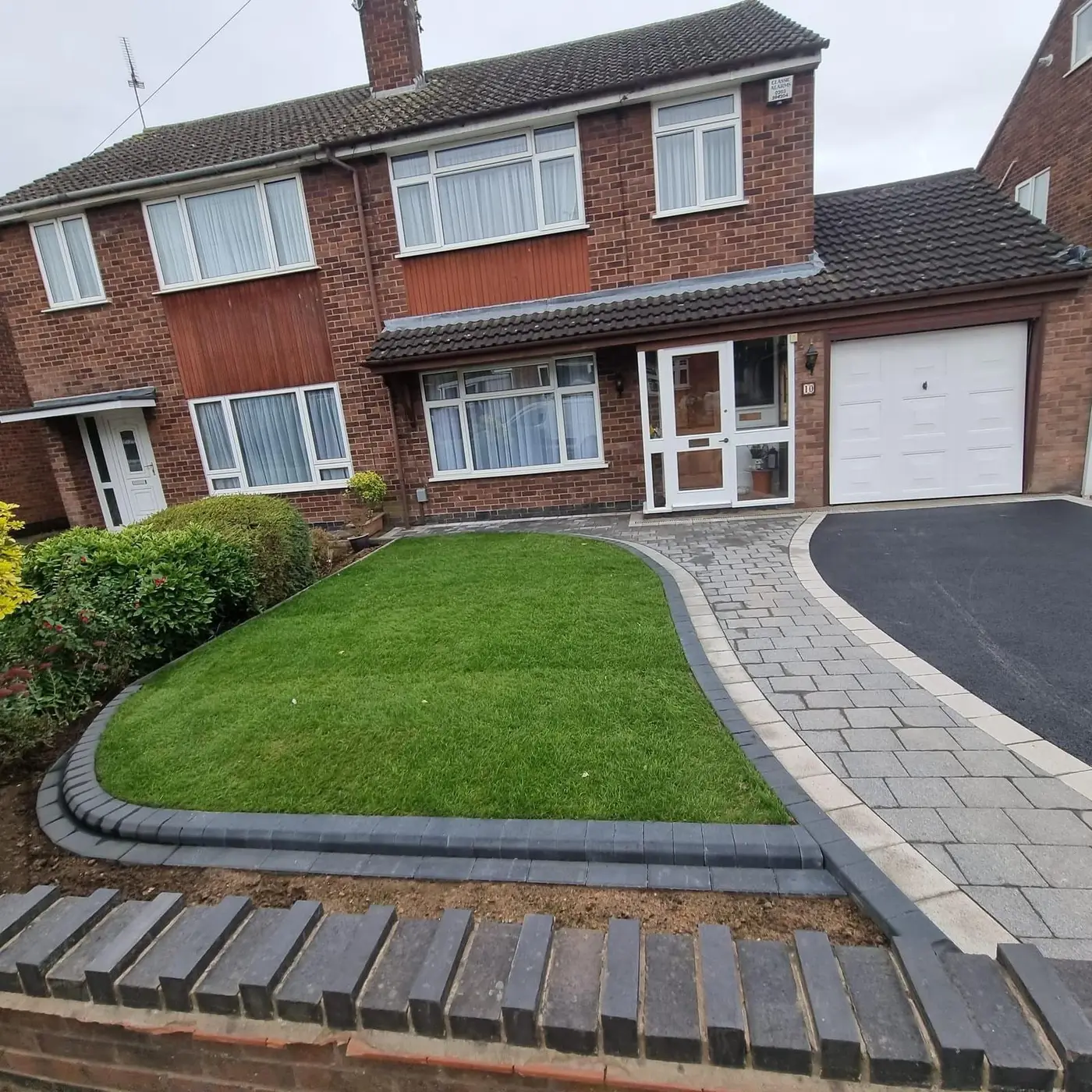
A black tarmac driveway edged in silver-grey block, beside a grey block path and a lawn with charcoal kerbs.
View project →The same way of working on every job, from the first conversation to the handover.
Anything else? Ask us at your design visit, or call 07599 004177.
Standard tarmac doesn’t let water through. More than 5 square metres of new impermeable surface in a front garden needs planning permission unless it drains to a lawn, border, soakaway or permeable area on your property. Porous asphalt is the other way round it.
Sometimes, if the existing surface is sound and the levels work, including at the door and the damp-proof course. If the old drive is breaking up or sinking, it needs to come out first.
New tarmac stays slightly soft for a while, so in hot weather it can scuff under tyres turned on the spot, or dent under a motorbike or ladder stand. It hardens with time.
To drive across the pavement you need your council’s approval as highway authority before the kerb is lowered. On a classified road, planning permission may be needed as well.
Book a visit. We’ll look at the ground, the levels and where the water goes, and talk through the options.
Your enquiry is with our design team. We’ll be in touch within one working day to book your free visit.